Global Oil Prices Surge in 2026 Amid Middle East Supply Tensions and Economic Uncertainty
Introduction
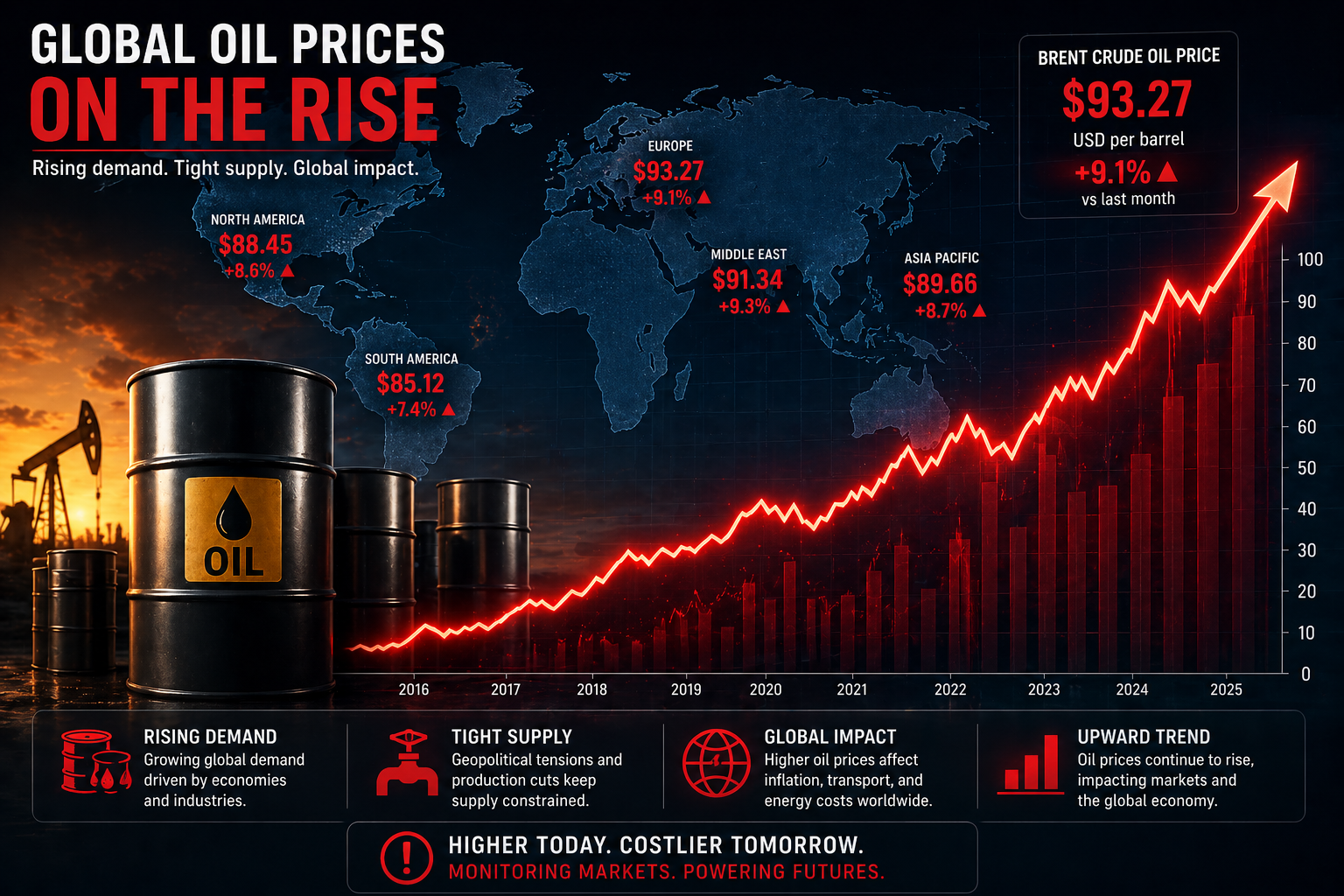
Global oil markets have entered a highly volatile phase in 2026 as crude oil prices continue to surge due to ongoing geopolitical tensions in the Middle East and disruptions in global supply chains. The sudden increase in oil prices has sent shockwaves through international markets, raising concerns about inflation, transportation costs, and energy security worldwide.
Brent crude and WTI (West Texas Intermediate) prices have both seen significant upward movement in recent weeks, marking one of the most unstable periods in the global energy sector since the early 2020s.
Economists warn that if the situation continues, the impact could extend far beyond fuel prices, affecting food supply chains, manufacturing costs, and global economic growth.
Why Oil Prices Are Rising in 2026
Several interconnected factors are driving the current surge in oil prices.
The most important include:
- Geopolitical tensions in oil-producing regions
- Reduced global oil supply
- Increasing global demand recovery
- Production cuts by major oil exporters
- Transportation route disruptions
- Weak currency conditions in emerging markets
These combined pressures are creating a tight global oil market.
Middle East Tensions Impacting Supply Chains
One of the key reasons behind rising oil prices is instability in key oil-producing regions, particularly in the Middle East.
The region is responsible for a large share of global crude oil exports.
Any disruption in production or transportation immediately affects global prices.
Key Concerns Include:
- Risk of pipeline disruptions
- Shipping route instability
- Political conflicts affecting production
- Reduced export capacity
Even minor disruptions have triggered sharp price movements in global markets.
OPEC+ Production Strategy
The Organization of the Petroleum Exporting Countries (OPEC+) continues to play a major role in global oil pricing.
Recent production strategies include:
- Controlled output reductions
- Gradual supply adjustments
- Price stabilization policies
While these measures aim to balance the market, they also contribute to tightening supply conditions.
Growing Global Demand for Oil
Despite increasing investment in renewable energy, global oil demand remains strong in 2026.
Demand is driven by:
- Recovery in global transportation
- Industrial growth in emerging economies
- Increased aviation activity
- Rising energy consumption in developing nations
The demand surge is adding further pressure on already limited supply.
Impact on Global Economy
Rising Fuel Prices Worldwide
One of the immediate effects of rising oil prices is increased fuel costs.
Consumers across many countries are experiencing:
- Higher petrol prices
- Increased diesel costs
- Rising transportation fares
- Expensive logistics operations
This is directly affecting household budgets and business expenses.
Inflationary Pressure
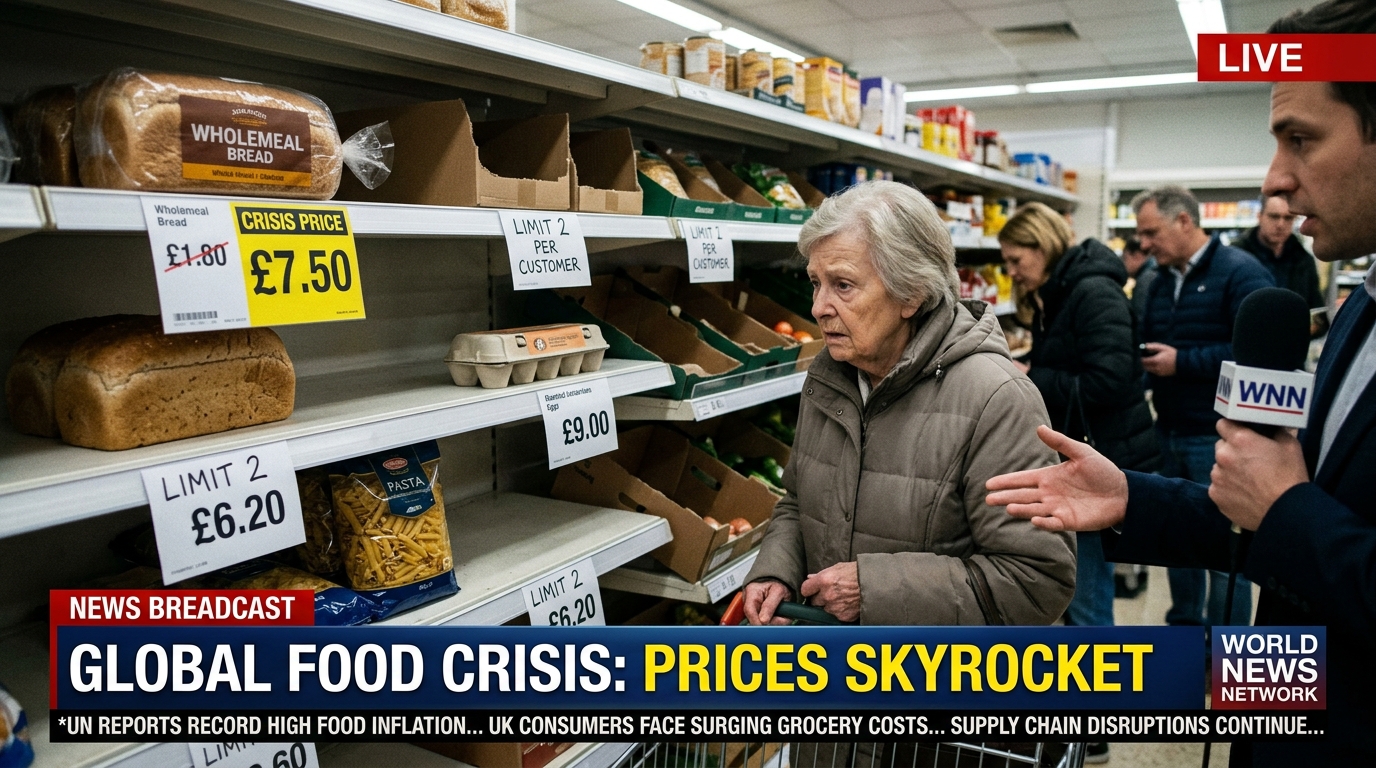
Higher oil prices are a major driver of inflation.
They increase costs in:
- Food production and transportation
- Manufacturing and industrial goods
- Shipping and logistics
- Energy-dependent services
As a result, many countries are seeing inflationary pressure return.
Impact on Emerging Economies
Developing countries are particularly vulnerable to rising oil prices.
Reasons include:
- Heavy dependence on imported oil
- Weak local currencies
- Limited energy reserves
- High transportation dependency
This leads to increased economic stress and budget deficits.

Stock Markets React to Oil Price Surge
Global financial markets have responded strongly to the oil price increase.
Key Market Reactions:
- Energy stocks gaining value
- Airline stocks under pressure
- Transportation companies facing losses
- Increased volatility in global indices
Investors are closely monitoring oil market trends as they directly influence broader economic performance.
Energy Sector Adjustments
Shift Toward Alternative Energy
Rising oil prices are accelerating the global shift toward renewable energy.
Governments and companies are investing more in:
- Solar energy
- Wind power
- Electric vehicles
- Hydrogen fuel technologies
This transition is expected to continue growing.
Increased Oil Exploration Efforts
At the same time, some countries are increasing oil exploration to stabilize supply.
This includes:
- Offshore drilling projects
- Expansion of oil fields
- New energy partnerships
However, these projects take time to impact global supply.
How Oil Prices Affect Everyday Life
Rising oil prices are not just a global economic issue—they directly impact daily life.
Transportation Costs
Higher fuel prices lead to:
- Expensive public transport
- Increased shipping charges
- Higher airline ticket prices
Food Prices
Food becomes more expensive due to:
- Higher transportation costs
- Increased agricultural fuel usage
- Supply chain inflation
Household Expenses
Families may face:
- Increased electricity bills
- Higher commuting costs
- Rising goods prices
Oil price changes affect nearly every sector.
Expert Predictions for 2026 Oil Market
Energy analysts suggest the oil market may remain unstable for the rest of 2026.
Possible Scenarios:
1. Continued High Prices
If supply disruptions continue, oil prices may stay elevated.
2. Market Stabilization
Improved diplomatic conditions could stabilize supply.
3. Sudden Price Drops
Unexpected production increases may bring temporary relief.
However, volatility is expected to remain high.
Government Responses Worldwide
Countries are taking steps to manage the impact of rising oil prices.
Policy Measures Include:
- Fuel subsidies
- Tax reductions on energy
- Strategic oil reserves usage
- Renewable energy incentives
Governments aim to protect consumers from extreme price shocks.
Role of Renewable Energy in Future Stability
Renewable energy is becoming more important in reducing dependence on oil.
Key developments include:
- Expansion of solar farms
- Growth of electric vehicle adoption
- Investment in clean energy infrastructure
This transition may reduce long-term oil dependency.
Why Oil Remains a Global Power Factor
Despite alternatives, oil continues to influence:
- Global politics
- Economic stability
- Trade relations
- Transportation systems
Control over oil supply still plays a major geopolitical role.
Future Outlook for Oil Markets
Experts believe the oil market is entering a long-term transition phase.
Key expectations:
- Continued price volatility
- Gradual shift toward clean energy
- More geopolitical influence on pricing
- Strong demand in developing nations
Oil will remain essential, but its dominance may slowly decline over time.
Conclusion
Global oil prices in 2026 are experiencing significant upward pressure due to geopolitical tensions, supply limitations, and strong demand recovery.
This surge is impacting everything from transportation costs to global inflation and financial markets. While governments and industries are responding with policy changes and renewable energy investments, the oil market remains highly unstable.
The situation highlights the ongoing dependence of the global economy on crude oil and the urgent need for diversified energy sources.
As 2026 progresses, oil will continue to be one of the most closely watched commodities in the world.

Frequently Asked Questions (FAQ)
Why are global oil prices rising in 2026?
Due to supply disruptions, geopolitical tensions, and increased global demand.
How do oil prices affect inflation?
Higher oil prices increase transportation and production costs, which raise overall prices.
What is OPEC’s role in oil pricing?
OPEC controls production levels that directly influence global oil supply and prices.
Will oil prices go down in 2026?
It depends on supply stability and global demand conditions; volatility is expected.
How does oil price increase affect consumers?
It leads to higher fuel costs, transportation expenses, and increased product prices.