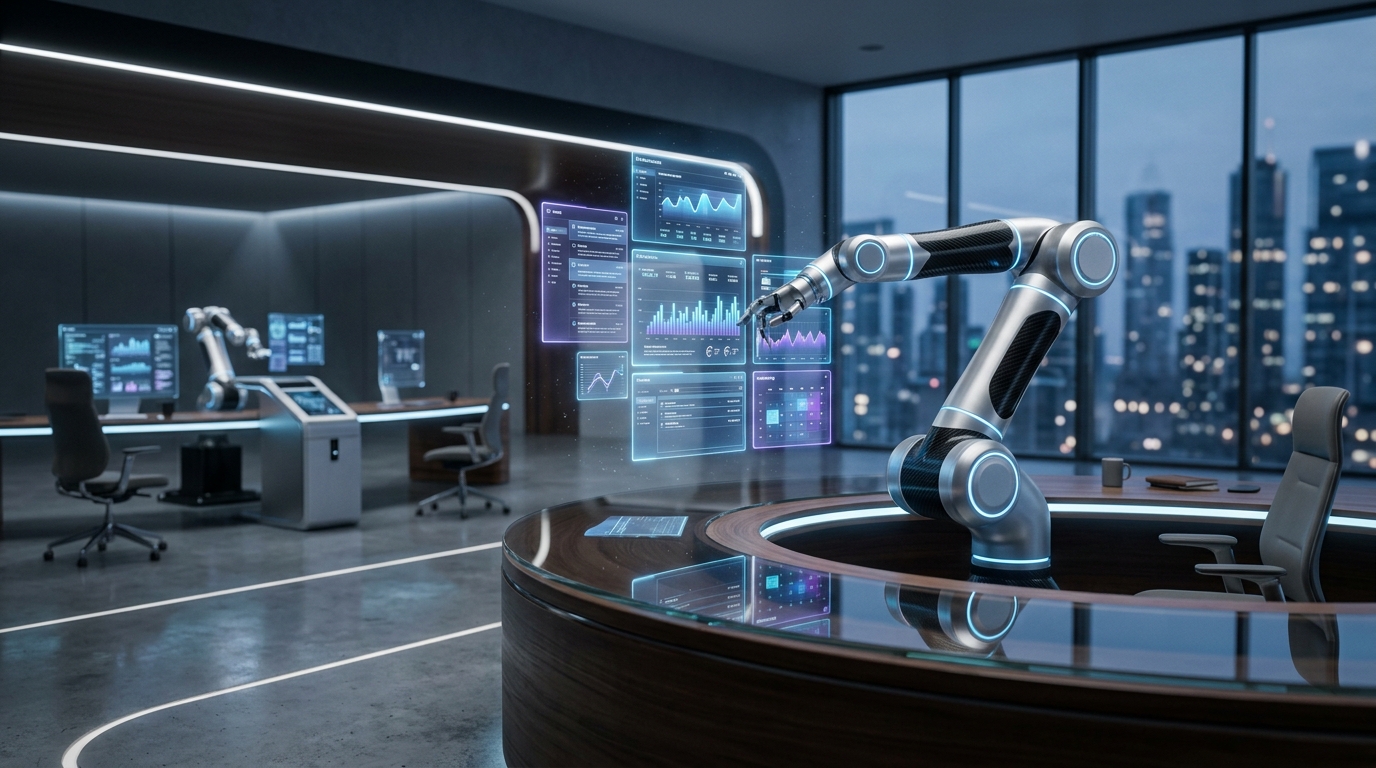
AI Job Loss Fears Grow in 2026 as Companies Replace Workers With Automation and Artificial Intelligence
Introduction
Artificial intelligence is transforming the global economy faster than most experts predicted, and in 2026, one of the biggest concerns surrounding AI is no longer science fiction—it is jobs.
Across industries worldwide, companies are rapidly adopting artificial intelligence tools, automation software and machine-learning systems to improve efficiency, reduce operational costs and increase productivity. While these technologies are creating new opportunities in some sectors, they are also raising serious fears about mass job displacement.
From customer service and media production to finance, transportation and retail, workers are increasingly worried that AI systems could replace human roles at an unprecedented scale. Tech companies continue unveiling advanced AI models capable of performing tasks that once required skilled professionals, while businesses are under growing pressure to cut costs in a slowing global economy.
As automation expands, economists, governments and labor experts are debating one critical question: will artificial intelligence create more jobs than it destroys—or is the world entering a new era of workforce disruption?
The debate has become one of the most searched and discussed global topics of 2026 because it affects nearly every profession and industry.
Why AI Job Loss Fears Are Increasing in 2026
AI Technology Is Advancing Rapidly
Artificial intelligence systems have become dramatically more powerful in recent years.
Modern AI tools can now:
- Write articles and reports
- Generate images and videos
- Analyze financial data
- Handle customer support conversations
- Create computer code
Tasks that once required human workers can now be partially or fully automated.
Businesses Want to Reduce Costs
Companies are increasingly turning to AI because automation can lower expenses.
Businesses see AI as a way to:
- Reduce labor costs
- Improve productivity
- Operate more efficiently
- Increase profits
In difficult economic conditions, cost-cutting strategies become even more attractive.
Industries Most Affected by AI Automation
Customer Service and Support
One of the first industries heavily impacted by AI has been customer service.
AI chatbots and virtual assistants now handle:
- Frequently asked questions
- Online customer support
- Order tracking
- Technical troubleshooting
Many companies are reducing the need for large support teams.
Media and Content Creation
AI tools are increasingly being used for:
- Writing marketing content
- Editing videos
- Designing graphics
- Creating news summaries
This has sparked debate across journalism, advertising and creative industries.
Retail and E-Commerce
Retail businesses are adopting AI systems for:
- Inventory management
- Automated checkouts
- Personalized shopping recommendations
Automation is changing both online and physical retail operations.
Tech Layoffs and Workforce Restructuring
Companies Restructuring Around AI
Many businesses are reorganizing teams as AI adoption increases.
Some companies are:
- Reducing staff numbers
- Freezing hiring
- Replacing repetitive tasks with automation
The tech sector has seen especially high levels of restructuring.
Fear of White-Collar Job Disruption
Unlike previous automation waves focused mainly on factory work, AI is now affecting white-collar professions.
This includes jobs in:
- Finance
- Law
- Marketing
- Administration
- Data analysis
Highly educated workers are increasingly concerned about long-term job security.
Why Companies Are Investing Billions in AI
Competition in the AI Industry
Technology companies are racing to dominate the AI market.
Businesses are investing heavily in:
- Generative AI systems
- Cloud computing infrastructure
- AI-powered software tools
The AI economy is becoming one of the fastest-growing sectors globally.
Productivity and Efficiency Gains
Supporters of AI argue that automation can improve efficiency dramatically.
Potential benefits include:
- Faster workflows
- Reduced errors
- Increased productivity
Businesses see AI as a competitive advantage.
Could AI Create New Jobs?
Historical Technology Trends
Some economists argue that technological revolutions often create new industries and employment opportunities over time.
Past innovations such as:
- The internet
- Smartphones
- Digital commerce
eventually generated millions of new jobs.
Emerging AI Careers
The rise of AI is already creating demand for workers in areas such as:
- AI development
- Cybersecurity
- Machine learning engineering
- Data science
However, experts warn that the transition may still be painful for many workers.
AI and the Future of Work
Hybrid Human-AI Workplaces
Many experts believe future workplaces will combine human workers with AI systems.
Employees may increasingly use AI for:
- Research assistance
- Productivity enhancement
- Data analysis
Instead of fully replacing workers, some companies may use AI to augment human performance.
Skills Becoming More Important
Workers are being encouraged to develop skills that are harder to automate.
These include:
- Critical thinking
- Creativity
- Emotional intelligence
- Leadership
Adaptability is becoming one of the most valuable career traits.
Governments and Labor Concerns
Calls for Regulation
As AI expands, governments are facing pressure to regulate automation.
Discussions include:
- Worker protections
- AI transparency laws
- Ethical guidelines
Policymakers are trying to balance innovation with economic stability.
Universal Basic Income Debate Returning
Some experts believe governments may eventually need stronger social support systems if automation significantly reduces employment opportunities.
Ideas being discussed include:
- Universal basic income
- Job retraining programs
- Education reforms
The future of labor policy is becoming a major global debate.
AI in Education and Learning
Schools Adapting to the AI Era
Educational institutions are changing rapidly because of AI technologies.
Students increasingly use AI tools for:
- Research
- Writing assistance
- Learning support
Schools and universities are debating how to manage AI responsibly.
Demand for Digital Skills Growing
Employers are prioritizing workers with:
- Technology knowledge
- Data literacy
- AI-related expertise
Digital skills are becoming essential across industries.
Why This Topic Is Trending Daily
AI job fears trend constantly online because they affect nearly every profession.
People are searching daily for:
- Which jobs AI may replace
- How automation affects careers
- Future-proof career paths
- AI industry updates
The topic generates massive engagement across news platforms and social media.
Impact on Mental Health and Society
Anxiety About Career Stability
Economic uncertainty and automation fears are creating emotional stress for many workers.
Common concerns include:
- Losing jobs
- Income instability
- Career uncertainty
Workers are increasingly worried about the future of employment.
Generational Divide Emerging
Younger workers may adapt more easily to AI-driven workplaces, while older employees may struggle with rapid technological change.
This could increase:
- Workplace inequality
- Skills gaps
- Economic pressure on vulnerable groups
The transition may reshape labor markets significantly.
AI and Global Economic Power
Countries Racing to Lead AI Development
Artificial intelligence has become a global strategic priority.
Major economies are investing billions into:
- AI research
- Semiconductor production
- Digital infrastructure
AI leadership is increasingly tied to economic and geopolitical influence.
Global Competition Intensifying
Countries view AI dominance as critical for:
- Economic growth
- Military innovation
- Technological independence
The AI race is becoming one of the defining global competitions of the decade.
Can Workers Protect Themselves From Automation?
Adapting to Changing Industries
Experts recommend focusing on continuous learning.
Important strategies include:
- Developing technical skills
- Learning AI tools
- Building creative abilities
- Improving communication skills
Workers who adapt may remain competitive.
Lifelong Learning Becoming Essential
Career paths are changing more rapidly than before.
Professionals increasingly need to:
- Update skills regularly
- Learn new technologies
- Stay flexible in changing industries
Education is becoming a continuous process rather than a one-time stage of life.

Why This Story Matters Globally
The AI revolution affects nearly every country, industry and profession.
Unlike previous technological shifts, AI is expanding at extraordinary speed and influencing both physical and digital work simultaneously.
This is why AI job loss fears have become one of the biggest global conversations in 2026.
Conclusion
Artificial intelligence is reshaping the global economy at a historic pace, bringing both opportunity and uncertainty. While AI technologies promise major advances in productivity, innovation and efficiency, they are also creating growing fears about job displacement and long-term workforce stability.
For businesses, automation offers a powerful competitive advantage. For workers, however, the future feels increasingly uncertain as more tasks become automated across industries.
The reality is likely to be complex. AI may eliminate certain jobs while creating entirely new categories of work that do not yet fully exist. The challenge for governments, businesses and workers will be managing this transition in a way that protects economic stability while still encouraging innovation.
One thing is clear: the future of work is changing faster than ever before, and artificial intelligence will remain at the center of that transformation for years to come.
Frequently Asked Questions
Why are AI job loss fears increasing?
Because AI systems are becoming capable of performing more human tasks.
Which industries are most affected by AI?
Customer service, media, retail and finance are among the most impacted sectors.
Will AI replace all jobs?
Most experts believe AI will replace some jobs while creating new opportunities in other areas.
What skills are safest from automation?
Creativity, leadership and emotional intelligence are harder for AI to replicate.
Why is this topic searched daily?
Because millions of workers are concerned about how AI may affect future careers.