Global Cybersecurity Threats Rising in 2026: What Businesses and Individuals Must Know
Introduction
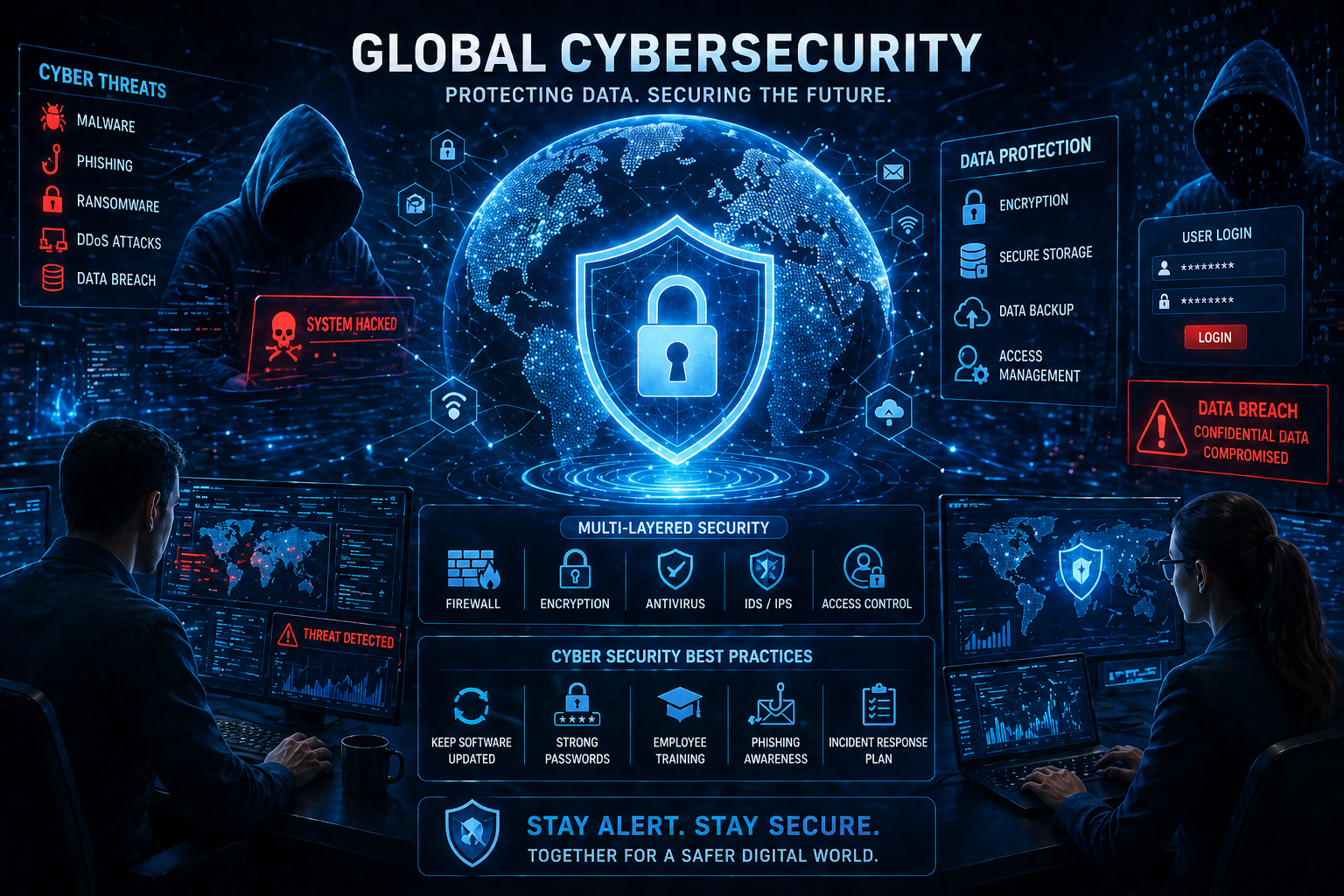
Cybersecurity has become one of the biggest global concerns in 2026. As businesses become more dependent on digital systems and individuals spend increasing amounts of time online, cybercriminals are evolving faster than ever. From large-scale ransomware attacks to sophisticated AI-powered scams, digital threats are becoming more dangerous, expensive, and widespread.
Governments, corporations, and ordinary internet users are all facing growing pressure to strengthen their security defenses. What once seemed like isolated hacking incidents have now become part of a global cybersecurity crisis.
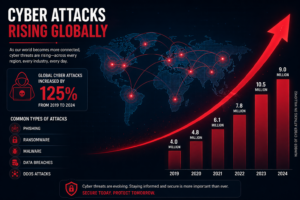
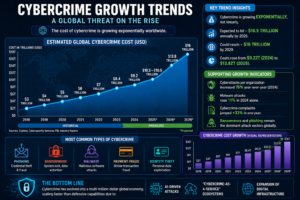
Experts warn that cybercrime damages could continue reaching record levels this decade, making cybersecurity not just a technology issue, but a major economic and national security concern.
Understanding these rising threats is essential for anyone connected to today’s digital world.
Why Cybersecurity Threats Are Increasing in 2026
The rapid growth of digital transformation has created opportunity—but also risk.
Several factors are fueling the rise in cyber threats:
- More businesses moving to cloud systems
- Remote and hybrid work expansion
- Growth of connected smart devices
- AI-powered hacking techniques
- Weak password and authentication practices
- Increasing value of stolen data
Cybercriminals are targeting both organizations and individuals using more advanced tools than ever before.
That has made cybersecurity one of the most urgent issues in global technology news.
Biggest Cybersecurity Threats in 2026
1. Ransomware Attacks Continue Rising
Ransomware remains one of the most serious cyber threats worldwide.
In these attacks, criminals encrypt company data and demand payment for its release.
Targets include:
- Hospitals
- Banks
- Government agencies
- Schools
- E-commerce businesses
- Critical infrastructure
Some attacks have disrupted entire operations for days or even weeks.
Why Ransomware Is Growing
Cybercriminal groups are becoming more organized.
Reasons for growth include:
- Ransomware-as-a-service operations
- Cryptocurrency payments
- Weak business security systems
- Profitable extortion models
- Cross-border cybercrime networks
Experts say ransomware will remain one of the top cybersecurity threats in 2026.
2. AI-Powered Cyber Attacks
Artificial intelligence is helping security teams—but also helping hackers.
This is creating a new era of cyber risk.
Attackers now use AI for:
- Smarter phishing scams
- Automated malware attacks
- Password cracking
- Deepfake fraud
- Social engineering attacks
These threats are becoming harder to detect.
Deepfake Cyber Fraud
One alarming trend is deepfake impersonation.
Criminals can mimic:
- Executive voices
- Video identities
- Financial instructions
This has led to fraud involving fake business requests and financial theft.
It represents a major new cybersecurity challenge.
3. Phishing Scams Becoming More Sophisticated
Phishing remains one of the most common online threats.
But in 2026, phishing attacks are far more convincing.
Attackers create fake:
- Bank emails
- Login pages
- Delivery notifications
- Job offers
- Government alerts
Some scams are nearly indistinguishable from real communication.
Why Phishing Still Works
Human error remains a major vulnerability.
Even strong security systems can fail when users are tricked.
That is why cybersecurity awareness matters as much as software protection.
Data Breaches Remain a Major Risk
4. Growing Threat of Data Breaches
Data breaches continue affecting companies across industries.
Hackers target valuable information such as:
- Customer records
- Payment data
- Health records
- Business secrets
- Personal identities
Breaches can cause:
- Financial losses
- Legal penalties
- Reputation damage
- Customer distrust
For businesses, prevention has become a top priority.
5. Cloud Security Risks
Cloud adoption is growing rapidly.
But misconfigured cloud systems have created serious vulnerabilities.
Common cloud security risks include:
- Weak access controls
- Exposed databases
- Poor encryption
- Insecure APIs
- Insider threats
As businesses rely more on cloud platforms, securing them has become critical.
Cybersecurity Threats Facing Individuals
Identity Theft Risks Growing
Cybercrime is not only targeting corporations.
Individuals face growing threats too.
Common risks include:
- Identity theft
- Financial fraud
- Account takeovers
- Mobile scams
- Credential theft
Personal cybersecurity is now just as important as business security.
Smart Device Vulnerabilities
Connected devices continue expanding.
Examples include:
- Smart home systems
- Security cameras
- Wearables
- Connected appliances
Many have weak built-in protections.
That makes them potential entry points for attackers.
The Internet of Things is creating new security challenges.
Cybersecurity Trends Shaping the Future
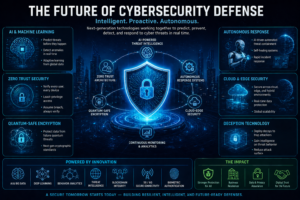
6. Zero Trust Security Becoming Standard
One of the biggest security trends in 2026 is Zero Trust.
Its principle:
Trust no one by default.
Verify everything.
This approach includes:
- Multi-factor authentication
- Continuous monitoring
- Strict access controls
- User verification
Many organizations now see Zero Trust as essential.
7. AI for Cyber Defense
While attackers use AI, defenders are also using it.
Security teams use AI for:
- Threat detection
- Real-time monitoring
- Suspicious behavior analysis
- Fraud prevention
- Automated incident response
This helps organizations respond faster.
AI is becoming central to cybersecurity defense.
8. Cybersecurity Regulations Expanding
Governments are increasing regulations around digital security.
Focus areas include:
- Data protection laws
- Critical infrastructure security
- Privacy requirements
- Breach reporting rules
Businesses ignoring compliance risks may face major consequences.
Cybersecurity is increasingly becoming a regulatory issue.
How Businesses Can Reduce Cyber Risk
Organizations can strengthen protection through practical steps.
Invest in Security Infrastructure
Businesses should prioritize:
- Endpoint protection
- Firewalls
- Encryption
- Threat monitoring
- Secure backups
Strong security foundations matter.
Train Employees
Many attacks begin through human error.
Regular employee training can reduce risk.
Topics should include:
- Phishing awareness
- Password security
- Device safety
- Social engineering threats
People are often the first line of defense.
Use Multi-Factor Authentication
Passwords alone are not enough.
Multi-factor authentication adds critical protection.
It should be standard for:
- Email accounts
- Financial systems
- Admin access
- Cloud platforms
Simple measures often prevent major breaches.
How Individuals Can Stay Safe Online
Cybersecurity is also personal responsibility.
Basic protections include:
Use Strong Unique Passwords
Avoid password reuse.
Use password managers where possible.
Strong credentials remain essential.
Enable Two-Factor Authentication
This significantly improves account protection.
It is one of the simplest security upgrades available.
Watch for Phishing Attempts
Before clicking links:
- Verify sender details
- Check suspicious requests
- Avoid unknown attachments
Caution prevents many attacks.
Keep Software Updated
Updates often include security patches.
Ignoring them can create vulnerabilities.
Regular updates matter.
Why Cybersecurity Will Remain Major Global News
Cybersecurity is no longer only a technology story.
It affects:
- Economies
- Elections
- National security
- Healthcare
- Financial markets
That makes it a major global news issue.
Experts expect cyber threats to remain one of the defining digital risks of the decade.
Future of Cybersecurity Beyond 2026
Several trends may shape the next phase of security.
Quantum Security Challenges
Quantum computing could transform cybersecurity.
It may strengthen defense—but also challenge traditional encryption.
Experts are already preparing.
Rise of Autonomous Security Systems
Future security may rely increasingly on automation.
Systems could detect and stop attacks with minimal human input.
This could reshape cyber defense.
Greater Focus on Cyber Resilience
Beyond preventing attacks, organizations are focusing on resilience.
That means:
- Faster recovery
- Backup planning
- Incident response readiness
Because breaches may be inevitable.
Preparedness matters.
Why This Matters for Businesses and Individuals
Cybersecurity is no longer optional.
Whether managing a corporation or using a smartphone, digital risk affects everyone.
Ignoring security can be costly.
Awareness and prevention have become essential survival strategies in the digital economy.
Conclusion
Cybersecurity threats are rising rapidly in 2026 as ransomware, AI-powered attacks, phishing scams, and data breaches continue growing worldwide.
Businesses face increasing pressure to strengthen defenses, while individuals must take personal digital safety more seriously than ever.
Although cyber threats are evolving, stronger awareness, smarter security practices, and new technologies are helping fight back.
Cybersecurity is no longer just an IT concern.
It is a global issue shaping the future of the digital world.
For organizations and individuals alike, staying prepared is no longer a choice—it is a necessity.
Frequently Asked Questions (FAQ)
What are the biggest cybersecurity threats in 2026?
Major threats include ransomware, phishing, AI-powered attacks, cloud vulnerabilities, and data breaches.
Why are cyber attacks increasing?
Growing digital dependence, weak security practices, and advanced hacker tools are driving more attacks.
What is Zero Trust security?
Zero Trust is a security model where no user or device is automatically trusted without verification.
How can businesses prevent cyber attacks?
Businesses can reduce risks through employee training, multi-factor authentication, strong infrastructure, and threat monitoring.
How can individuals stay safe online?
Use strong passwords, enable two-factor authentication, avoid phishing scams, and keep devices updated.