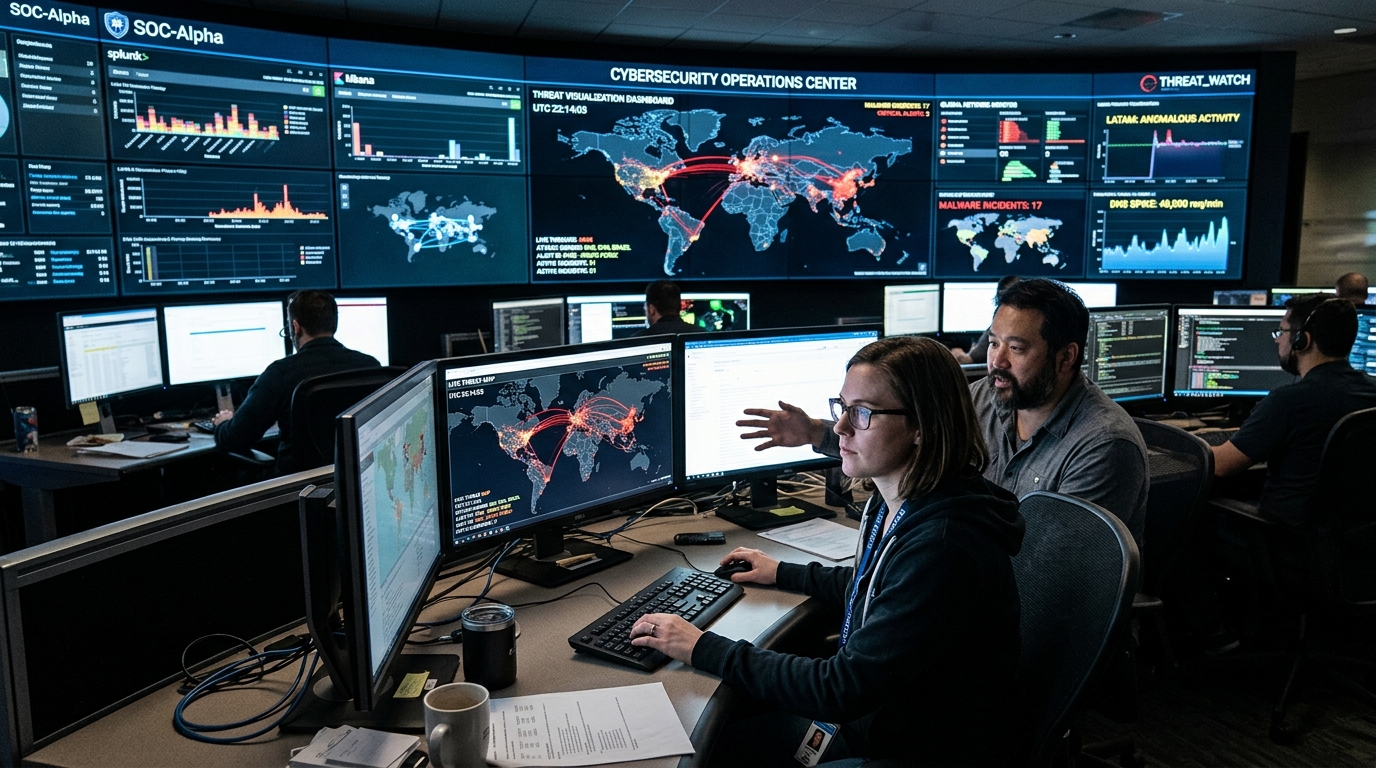
Global Cybersecurity Threats Surge in 2026 as Hackers Target Governments, Banks and Critical Infrastructure
Introduction
Cybersecurity threats have escalated sharply in 2026, with governments, financial institutions and critical infrastructure becoming prime targets for increasingly sophisticated cyber attacks. Experts warn that the scale, frequency and complexity of hacking incidents are rising at an alarming rate, raising concerns about global digital security.
From ransomware attacks disrupting major corporations to cyber intrusions targeting government systems, the digital battlefield has become one of the most critical fronts in global security. Analysts say cyber threats are no longer isolated incidents but part of a broader trend that could have serious economic and geopolitical consequences.
With digital systems forming the backbone of modern economies, cybersecurity has become one of the most urgent and widely discussed issues in breaking news this year.
Why Cybersecurity Threats Are Rising in 2026
Several factors are driving the surge in cyber threats.
Key Drivers
- Rapid digital transformation
- Increased reliance on online systems
- Growing use of artificial intelligence
- Weak cybersecurity infrastructure in some regions
- Rising geopolitical tensions
- Expansion of cybercrime networks
Experts say these factors are creating new vulnerabilities across global systems.
Rise of Ransomware Attacks
Ransomware remains one of the most dangerous cyber threats.
Attackers:
- Lock systems and demand payment
- Target businesses, hospitals and governments
- Cause major operational disruptions
Ransomware attacks have become more organized and financially motivated.
Data Breaches Becoming More Frequent
Data breaches are exposing sensitive information worldwide.
Targets include:
- Financial institutions
- Government databases
- Healthcare systems
- Corporate networks
This raises concerns over privacy and security.

Critical Infrastructure Under Threat
Energy and Power Systems Targeted
Cyber attacks on energy infrastructure are a growing concern.
Risks include:
- Power outages
- Disruption of energy supply
- Economic damage
Such attacks can have widespread consequences.
Financial Systems Facing Cyber Risks
Banks and financial networks are also prime targets.
Threats include:
- Fraud attacks
- Payment system disruptions
- Data theft
Cybersecurity in finance is becoming increasingly critical.
Cyber Warfare and Geopolitical Risks
Digital Conflict Between Nations
Cybersecurity is now closely linked to geopolitics.
Countries are investing in cyber capabilities for:
- Defense strategies
- Intelligence gathering
- Strategic operations
This has raised concerns over cyber warfare.
Risks of State-Sponsored Attacks
Some cyber attacks are believed to involve state-backed actors.
These attacks may target:
- Government systems
- Military networks
- Strategic industries
This increases global security risks.
Impact on Global Economy
Financial Losses Increase
Cyber attacks are causing significant economic damage.
Costs include:
- System recovery
- Data loss
- Operational disruption
- Reputation damage
Global losses are rising each year.
Business Disruption
Companies face:
- Downtime
- Loss of customer trust
- Increased security costs
Cybersecurity has become a top business priority.
Technology and AI Changing Cybersecurity
Hackers Using Advanced Tools
Cybercriminals are using advanced technologies including AI.
This allows them to:
- Automate attacks
- Bypass security systems
- Launch more sophisticated operations
This makes threats harder to detect.
Cyber Defense Also Evolving
At the same time, cybersecurity systems are improving.
Advancements include:
- AI-based threat detection
- Real-time monitoring systems
- Advanced encryption
The battle between attackers and defenders continues.
Government and Policy Response
Stronger Cybersecurity Laws
Governments are introducing stricter cybersecurity regulations.
These include:
- Data protection laws
- Mandatory reporting requirements
- Security compliance standards
Policy responses are evolving rapidly.
International Cooperation Efforts
Countries are also working together to combat cyber threats.
Efforts include:
- Intelligence sharing
- Joint security initiatives
- Cyber defense alliances
However, challenges remain.
Possible Scenarios for 2026
Scenario One: Improved Security
Better technology and policies reduce cyber risks.
Scenario Two: Continued Threat Growth
Cyber attacks continue to increase in scale and complexity.
Scenario Three: Major Cyber Crisis
A large-scale cyber attack disrupts critical global systems.
This remains a serious concern.
Impact on Individuals
Personal Data Risks
Individuals face risks such as:
- Identity theft
- Financial fraud
- Privacy violations
Awareness is becoming essential.
Need for Cyber Awareness
Experts recommend:
- Strong passwords
- Secure networks
- Awareness of phishing scams
Cybersecurity is not just a government issue—it affects everyone.
Why This Is One of the Biggest Stories of 2026
Cybersecurity threats affect:
- Governments
- Businesses
- Individuals
- Global stability
That makes it one of the most critical global issues today.

Expert Outlook
Analysts expect cyber threats to remain a major concern.
Key areas to watch:
- New attack methods
- AI-driven cyber risks
- Government regulations
- International cooperation
The threat landscape is evolving quickly.
Conclusion
Global cybersecurity threats in 2026 are rising rapidly as digital systems become more central to everyday life and economic activity. From ransomware attacks to cyber warfare risks, the scale of the challenge continues to grow.
While governments and companies are investing heavily in defense, the evolving nature of cyber threats means the risk is unlikely to disappear anytime soon.
Cybersecurity will remain one of the most important issues shaping the global future.
Frequently Asked Questions
Why are cyber attacks increasing in 2026?
Due to digital growth, advanced technology and rising cybercrime networks.
What is ransomware?
A type of attack where hackers lock systems and demand payment.
Can cyber attacks affect countries?
Yes, they can disrupt infrastructure, economy and security.
How can individuals stay safe online?
By using strong security practices and staying aware of threats.
Why is cybersecurity important globally?
Because it protects systems, data and economic stability.