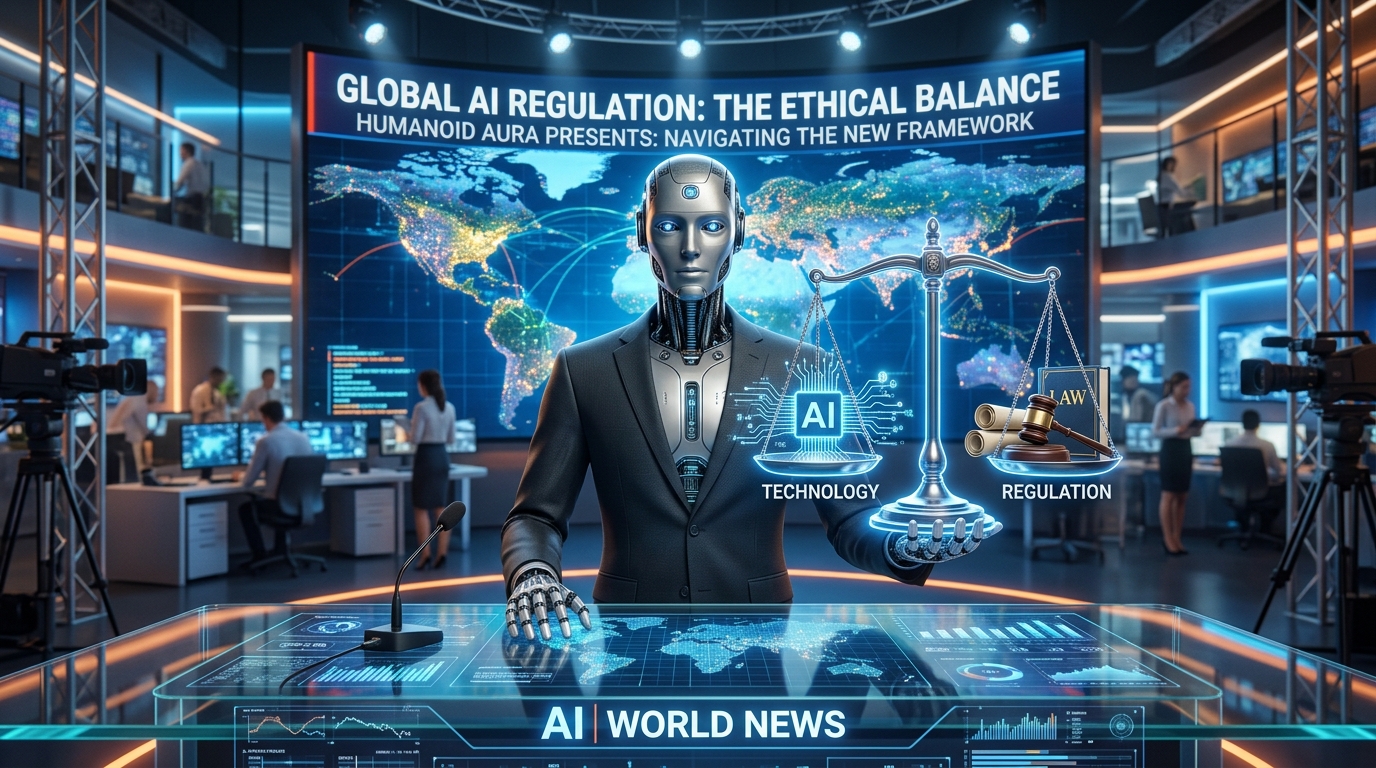
Global AI Regulation Battle Intensifies in 2026 as Governments Race to Control Artificial Intelligence Risks
Introduction
Artificial intelligence has become one of the most powerful and disruptive technologies of the modern era—and in 2026, it is also one of the most contested. Governments across the world are accelerating efforts to regulate AI as concerns grow over security risks, misinformation, job displacement, and the influence of major technology companies.
What began as a technological revolution is now turning into a global policy battle. Lawmakers, regulators, and tech leaders are increasingly divided on how to balance innovation with control, creating a rapidly evolving landscape of AI governance.
With new laws, policy frameworks and international debates emerging almost monthly, AI regulation has quickly become one of the most important breaking news stories in global politics, technology, and economics.
Why AI Regulation Is Becoming Urgent
The rapid growth of AI capabilities has outpaced regulation in many countries.
Key concerns driving urgency include:
- AI-generated misinformation
- Data privacy risks
- Job automation impact
- National security concerns
- Bias and ethical issues
- Lack of global standards
Experts warn that without proper regulation, AI could create widespread disruption.
Rise of Generative AI Raises New Risks
One of the biggest drivers of regulation is the explosion of generative AI tools.
These systems can:
- Create realistic text, images, and videos
- Influence public opinion
- Spread misinformation at scale
- Automate complex decision-making
While powerful, these capabilities have raised serious concerns among policymakers.
Governments Concerned About Control
Governments are increasingly worried about losing control over rapidly evolving AI systems.
Key issues include:
- Who controls AI development
- How AI is used in society
- Risks of misuse by bad actors
- Lack of transparency in algorithms
This has led to calls for stronger oversight.

Global AI Regulation Efforts in 2026
Countries Introducing New AI Laws
Several countries are actively developing or implementing AI regulations.
Common approaches include:
- AI risk classification systems
- Mandatory transparency rules
- Data protection requirements
- AI safety standards
Regulatory frameworks are evolving quickly.
Differences in Global Approaches
Not all countries agree on how to regulate AI.
Some prioritize:
- Innovation and economic growth
Others focus on:
- Safety and strict oversight
This has created a fragmented global regulatory environment.
Big Tech Under Increasing Pressure
Governments Target Tech Companies
Major technology firms are facing increased scrutiny.
Concerns include:
- Market dominance
- Data usage practices
- AI model transparency
- Accountability for AI decisions
Regulators are pushing for more control over big tech.
Calls for AI Accountability
Policymakers are demanding that companies take responsibility for AI systems.
Key proposals include:
- Auditing AI systems
- Liability for harmful outcomes
- Clear usage disclosures
This marks a shift toward stronger oversight.
AI and National Security Concerns
Strategic Technology Competition
AI is increasingly seen as a strategic asset.
Governments are investing in AI for:
- Defense systems
- Cybersecurity
- Intelligence operations
This has turned AI into a geopolitical issue.
Risks of AI Misuse
Security experts warn about risks such as:
- Cyber attacks powered by AI
- Autonomous weapons concerns
- Deepfake misinformation campaigns
These risks are shaping regulatory debates.
Economic Impact of AI Regulation
Innovation vs Regulation Debate
One major challenge is balancing innovation with control.
Too much regulation could:
- Slow technological progress
- Reduce competitiveness
Too little regulation could:
- Increase risks
- Harm public trust
Finding the right balance is critical.
Impact on the Global Tech Industry
AI regulation could reshape the tech sector.
Possible effects include:
- Increased compliance costs
- Slower product development
- Changes in global competition
Companies are closely watching policy developments.

AI Regulation and the Future of Jobs
Automation Concerns
AI is expected to transform the workforce.
Key concerns include:
- Job displacement
- Skills gap
- Changing labor markets
Governments are considering policies to address these issues.
New Opportunities
At the same time, AI may create:
- New industries
- New job roles
- Increased productivity
The impact remains uncertain.
Global Cooperation Challenges
Need for International Standards
Many experts argue that AI requires global coordination.
Challenges include:
- Different national priorities
- Competing economic interests
- Political tensions
Without coordination, regulation may remain fragmented.
Risk of Regulatory Competition
Some countries may adopt looser rules to attract AI investment.
This could lead to:
- Regulatory competition
- Uneven safety standards
This is a growing concern.
Possible Scenarios for AI Regulation
Scenario One: Balanced Regulation
Countries create frameworks that support innovation while managing risk.
Scenario Two: Strict Global Control
Stricter international rules limit AI development risks.
Scenario Three: Fragmented System
Different countries adopt conflicting regulations, increasing complexity.
This is currently the most likely outcome.
Why This Is One of the Biggest Stories of 2026
AI regulation touches multiple global issues:
- Technology
- Politics
- Economy
- Security
That makes it one of the most important global developments.
Expert Outlook
Analysts expect AI regulation to evolve rapidly.
Key factors to watch:
- New laws and policies
- Tech industry response
- International cooperation
- AI technology advancements
The situation is changing quickly.
Conclusion
The global battle over AI regulation in 2026 reflects the growing importance of artificial intelligence in shaping the future of society, economy, and security. As governments attempt to control risks while supporting innovation, the world is entering a new phase of technological governance.
The outcome of this regulatory race will have long-term consequences for global power, economic growth, and digital freedom.
AI is no longer just a technology story—it is now a global political and economic issue.
Frequently Asked Questions
Why is AI regulation important?
Because AI affects security, jobs, privacy, and global stability.
Are governments regulating AI in 2026?
Yes, many countries are introducing new AI laws and policies.
Can AI regulation slow innovation?
It may, but it can also reduce risks and increase trust.
What are the biggest risks of AI?
Misinformation, job loss, security threats, and lack of control.
Why is AI a global issue?
Because it affects economies, politics, and security worldwide.