What is Artificial Intelligence? Complete Beginner Guide (2026)
Introduction
Artificial Intelligence (AI) is one of the most powerful technologies shaping our world today. From smartphones to smart homes, AI is becoming a part of our daily lives faster than ever before. In 2026, AI is not just a buzzword anymore—it is a real tool that is changing how we work, learn, and communicate.
But what exactly is Artificial Intelligence? How does it work? And why is it so important?
In this beginner-friendly guide, we will explain everything you need to know about AI in simple and easy language.
What is Artificial Intelligence?
Artificial Intelligence (AI) refers to the ability of machines or computer systems to perform tasks that normally require human intelligence. These tasks include thinking, learning, problem-solving, understanding language, and even recognizing images.
In simple words, AI allows machines to “think” and “learn” like humans.
For example:
- Voice assistants like Siri or Google Assistant
- Recommendation systems on YouTube or Netflix
- Self-driving cars
All of these use Artificial Intelligence to function.
How Does Artificial Intelligence Work?
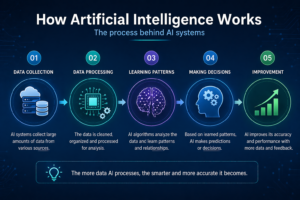
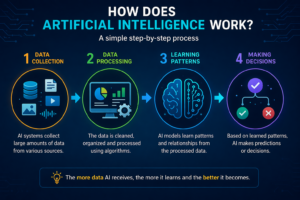
AI works by using data, algorithms, and machine learning models. It learns patterns from data and improves its performance over time.
Here are the basic steps of how AI works:
1. Data Collection
AI systems need large amounts of data. This data can be text, images, videos, or numbers.
2. Processing Data
The system processes and analyzes the data using algorithms.
3. Learning Patterns
AI identifies patterns and relationships in the data.
4. Making Decisions
Based on learned patterns, AI makes decisions or predictions.
The more data AI gets, the better it becomes.
Types of Artificial Intelligence
AI can be divided into different types based on its capabilities.
1. Narrow AI (Weak AI)
This type of AI is designed to perform a specific task.
Examples include:
- Voice assistants
- Chatbots
- Recommendation systems
Most AI we use today falls into this category.
2. General AI (Strong AI)
This type of AI can perform any intellectual task like a human.
It is still under development and not fully achieved yet.
3. Super AI
This is a future concept where AI becomes smarter than humans.
It is still theoretical and does not exist yet.
Real-Life Examples of Artificial Intelligence
AI is already being used in many industries and everyday applications.
1. Smartphones
Face recognition, voice commands, and smart cameras use AI.
2. Healthcare
AI helps doctors diagnose diseases and suggest treatments.
3. Education
AI tools help students learn better through personalized learning.
4. E-commerce
Online stores use AI to recommend products based on your behavior.
5. Transportation
Self-driving cars and traffic management systems use AI technology.
Benefits of Artificial Intelligence
AI offers many advantages that make life easier and more efficient.
1. Automation of Tasks
AI can perform repetitive tasks quickly and accurately.
2. Faster Decision Making
AI can analyze large amounts of data in seconds.
3. Improved Accuracy
AI reduces human errors in many fields.
4. 24/7 Availability
AI systems can work continuously without breaks.
5. Better User Experience
AI personalizes content, making services more useful.
Challenges and Risks of AI
While AI has many benefits, it also comes with some challenges.
1. Job Displacement
Automation may replace some human jobs.
2. Data Privacy Issues
AI systems require large amounts of data, raising privacy concerns.
3. High Costs
Developing AI systems can be expensive.
4. Lack of Human Emotion
AI cannot fully understand human emotions and creativity.
Future of Artificial Intelligence
The future of AI looks very promising. By 2030, AI is expected to become even more advanced and integrated into our daily lives.
Some future possibilities include:
- Smarter virtual assistants
- Fully autonomous vehicles
- Advanced healthcare systems
- AI-powered education platforms
AI will continue to transform industries and create new opportunities.
How to Start Learning Artificial Intelligence
If you are interested in AI, here are some simple steps to get started:
1. Learn the Basics
Understand concepts like machine learning and data science.
2. Take Online Courses
Many free and paid courses are available online.
3. Practice with Tools
Try beginner-friendly AI tools and platforms.
4. Stay Updated
Follow the latest trends and news about AI.
Conclusion
Artificial Intelligence is no longer just a futuristic idea—it is a powerful technology that is already changing the world. From smartphones to healthcare, AI is making our lives easier, faster, and more efficient.
Understanding AI is important because it will continue to shape the future. Whether you are a student, a professional, or just curious, learning about AI can open new opportunities.
As technology continues to grow, Artificial Intelligence will play an even bigger role in our daily lives. Now is the perfect time to start learning and exploring this exciting field.